
| 出版社 | MarketsandMarkets |
| 出版年月 | 2025年8月 |
Electric Light Commercial Vehicle Market – Global Forecast to 2032

本調査レポートは、電気小型商用車市場を、車両タイプ(ピックアップトラックおよびバン)、駆動方式(バッテリー式電気自動車およびプラグインハイブリッド電気自動車)、バッテリータイプ(LFP、NMC、ソリッドステート、その他)、バッテリー容量(最大50kWh、50~100kWh、100~150kWh)、航続距離(最大100マイル、100~200マイル、200マイル以上)、GVWR(車両総重量6,000ポンド未満および6,001~10,000ポンド)、最終用途(ラストマイル配送、フィールドサービス、配送サービス)、および地域(中国、アジア太平洋(中国を除く)、欧州、北米)別に分類しています。レポートは、市場の成長に影響を与える主要な要因(推進要因、制約要因、課題、機会など)に関する詳細な情報を網羅しています。主要業界プレーヤーの詳細な分析により、事業概要、ソリューションとサービス、主要戦略、契約、パートナーシップ、合意、製品・サービスの発売、合併・買収、そして電気小型商用車市場に関連する最近の動向に関する洞察が得られました。本レポートでは、電気小型商用車市場エコシステムにおける新興企業の競合分析も網羅しています。
電気小型商用車市場は、2025年には244億9,000万米ドルに達すると推定されており、2025年から2032年にかけて年平均成長率25.0%で成長し、2032年には1,166億米ドルに達すると予測されています。この急速な拡大は、排出量削減に向けた規制圧力、eコマースの成長による都市物流の需要増加、および取得コストを削減する政府の有利なインセンティブによって推進されています。たとえば、米国とカナダでは、厳格な排出基準(EPA 2027基準など)と、米国で最大4万米ドル、カナダ(iMHZEV)で最大14万6,000米ドルの強力な購入インセンティブ、および州および地方の追加的なリベートによって、電気商用バンおよびピックアップの急速な普及が推進されています。これは、eコマースの成長による都市物流の需要増加によってさらに後押しされ、電動ドライブトレインへの移行が加速しています。欧州は、ドイツ、フランス、英国、オランダなどの国々が主導する主要なEV導入国であり続けています。一方、中国は強力な国内補助金と垂直統合されたEVサプライチェーンの恩恵を受けています。インドと東南アジアでは、それぞれFAME-IIなどの政府支援策と商用車需要の増加に支えられ、EV導入が加速しています。
バッテリー化学(LFP/NMC)の技術的進歩、フリートデポへのDC急速充電インフラの導入、テレマティクスとフリート管理システムの統合により、e-LCVの実現可能性はさらに高まります。ステランティス、フォード、ルノー、五菱汽車といった大手OEMが生産を拡大するにつれ、市場はニッチ市場から主流市場へと移行しつつあり、都市部や地方部の多様な物流ニーズに対応するために、2トン未満の小型LCVと2~3.5トンの配送用バンという明確なセグメンテーションが形成されつつあります。
The electric light commercial vehicle market is estimated at USD 24.49 billion in 2025 and is projected to reach USD 116.60 billion by 2032 at a CAGR of 25.0% from 2025 to 2032. This rapid expansion is driven by regulatory pressure to cut emissions, rising urban logistics demand due to e-commerce growth, and favorable government incentives that reduce acquisition costs. For instance, in the US and Canada, rapid adoption of electric commercial vans and pickups is driven by strict emission norms (e.g., EPA 2027 standards) and strong purchase incentives up to USD 40,000 in the US and up to USD 146,000 in Canada (iMHZEV), with additional state and provincial rebates. This is further supported by rising urban logistics demand due to e-commerce growth, accelerating the shift to electric drivetrains. Europe remains a key adopter, led by countries like Germany, France, the UK, and the Netherlands, while China benefits from strong domestic subsidies and vertically integrated EV supply chains. In India and Southeast Asia, adoption is gaining momentum, supported by government schemes like FAME-II and increasing commercial fleet demand, respectively. Technological advancements in battery chemistries (LFP/NMC), deployment of DC fast-charging infrastructure at fleet depots, and integration of telematics and fleet management systems further enhance the viability of e-LCVs. With major OEMs such as Stellantis, Ford, Renault, and Wuling Motors scaling production, the market is transitioning from niche to mainstream, with a precise segmentation emerging between sub-2-ton mini-LCVs and 2–3.5-ton delivery vans for diverse urban and regional logistics needs.
The electric light commercial vehicle market is dominated by major players, including Wuling Motors Holdings Limited (China), Ford Motor Company (US), General Motors (US), Stellantis NV (Netherlands), and Renault (France).
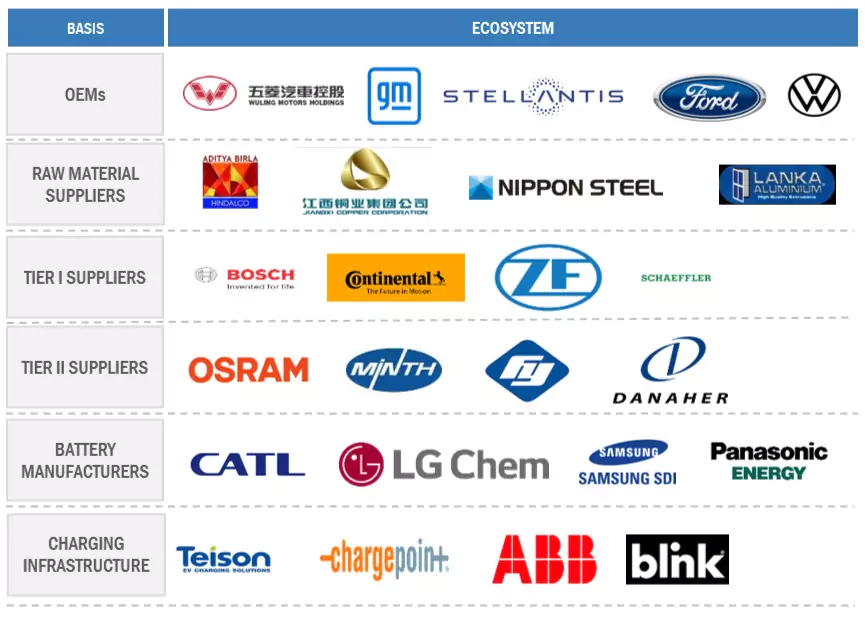
electric-light-commercial-vehicle-market-new-ecosystem
Reasons to Buy this Report
The report will help the market leaders/new entrants in this market with information on the closest approximations of the revenue numbers for the overall electric light commercial vehicle market and the subsegments. This report will also help stakeholders understand the competitive landscape and gain more insights to position their businesses better and plan suitable go-to-market strategies. It will help stakeholders understand the pulse of the market and provide them with information on key market drivers, restraints, challenges, and opportunities.
The report provides insights into the following pointers:
- Analysis of key drivers (cost optimization in EV batteries enhancing profitability and adoption, Escalating fossil fuel costs driving energy transition, Surging demand for zero-emission eLVCs reshaping logistics operations, government initiatives promoting eLCV adoption), restraints (inadequate charging infrastructure and persistent range anxiety hindering market adoption, exposure to supply chain disruptions), opportunities (battery leasing and mobility-as-a-service (MaaS) models, development of wireless EV charging technology for on-the-go charging), and challenges (lack of standardization in charging protocols, low availability of lithium for EV batteries) influencing the growth of the electric light commercial vehicle market
- Product Development/Innovation: Detailed insights into upcoming technologies and research & development activities in the electric light commercial vehicle market
- Market Development: Comprehensive information about lucrative markets (the report analyses the electric light commercial vehicle market across varied regions)
- Market Diversification: Exhaustive information about new products & services, untapped geographies, recent developments, and investments in the electric light commercial vehicle market
Competitive Assessment: In-depth assessment of market shares, growth strategies, and service offerings of leading players, such as Wuling Motors Holdings Limited. (China), Ford Motor Company (US), General Motors (US), Stellantis NV (Netherlands), and Renault (France), in the electric light commercial vehicle market