
| 出版社 | MarketsandMarkets |
| 出版年月 | 2025年10月 |
Warehouse Management System Market – Global Forecast To 2030

倉庫管理システム(WMS)市場 – オファリング(ソフトウェア、サービス)、デプロイメント(オンプレミス、クラウド)、ティア(上級、中級、基本)、アプリケーション(サプライチェーンと物流の最適化、資産と在庫の追跡) – 2030年までの世界予測
世界の倉庫管理システム(WMS)市場は、年平均成長率(CAGR)17.1%で成長し、2025年の45億7,000万米ドルから2030年には100億4,000万米ドルに成長すると予測されています。企業がeコマースプラットフォーム、実店舗、卸売チャネルなど、様々な流通チャネルに事業を拡大するにつれ、在庫、受注、フルフィルメントプロセスの管理の複雑さは著しく増大します。しかし、WMSは、複数のチャネルをシームレスに監視・調整する一元化されたプラットフォームを提供することで、これらの複雑さを簡素化します。
本レポートでは、倉庫管理システム(WMS)市場を、提供、導入、階層、アプリケーション、エンドユーザー、および地域に基づいてセグメント化しています。提供セグメントには、ソフトウェアとサービスが含まれます。導入セグメントには、オンプレミスとクラウドベースが含まれます。階層セグメントには、上級(Tier 1)、中級(Tier 2)、および基本(Tier 3)が含まれます。アプリケーションセグメントは、サプライチェーンと物流の最適化、資産と在庫の追跡、注文履行と配送、ヤードとドックの管理、労働力/労働管理、およびその他のアプリケーションで構成されます。エンドユーザーセグメントには、3PL、自動車、食品と飲料、ヘルスケア、化学品、eコマース、電気と電子、金属と機械、およびその他のエンドユーザーが含まれます。市場は、北米、アジア太平洋、ヨーロッパ、その他の地域(RoW)の4つの地域に分割されています。
本レポートは、市場全体および各サブセグメントの収益数値の近似値に関する情報を提供し、市場のリーダー企業および新規参入企業にとって役立ちます。また、ステークホルダーが競争環境を理解し、自社のポジショニングを改善し、適切な市場開拓戦略を策定するための洞察を深めるのに役立ちます。さらに、本レポートは、ステークホルダーが倉庫管理システム市場の動向を理解するのに役立ち、主要な市場牽引要因、制約要因、課題、そして機会に関する情報を提供します。
本レポートを購入する主なメリット
- 倉庫管理システム(WMS)市場の成長に影響を与える主要な推進要因(eコマース市場の急成長、クラウドベースのWMSソリューションの導入拡大、多様な流通チャネルをまたぐ事業拡大、顧客体験向上のためのサプライチェーンプロセス最適化への注力強化)、制約要因(熟練人材の不足、中小企業向けオンプレミスWMSの導入・保守コストの高騰、サイバーセキュリティの脅威)、機会(サプライチェーンにおけるデジタルトランスフォーメーション、物流セクターにおける産業成長とインフラ投資の加速、WMSへのビデオAI技術の組み込み)、課題(事業拡大に対応するための拡張性の維持、中小企業におけるWMSソリューションの導入率の低さにつながる認知度の低さ、定期的なソフトウェアアップグレードと堅牢なセキュリティの必要性)の分析
- 製品開発/イノベーション:倉庫管理システム市場における今後の技術、研究開発活動、製品投入に関する詳細な洞察
- 市場開発:様々な地域における倉庫管理システム市場の分析を含む、収益性の高い市場に関する包括的な情報
- 市場多様化:新製品/サービス、未開拓地域、最近の開発状況、倉庫管理システムへの投資に関する網羅的な情報
- 競合評価:Manhattan Associates(米国)、Blue Yonder Group, Inc.(米国)、Körber AG(ドイツ)、Oracle(米国)、SAP SE(ドイツ)など、主要企業の市場シェア、成長戦略、サービス提供に関する詳細な評価
Report Description
At a CAGR of 17.1%, the global warehouse management system market is anticipated to grow from USD 4.57 billion in 2025 to USD 10.04 billion by 2030. With businesses expanding their reach across various distribution channels such as e-commerce platforms, brick-and-mortar stores, wholesale channels, and more, the complexity of managing inventory, orders, and fulfillment processes increases significantly. However, WMS simplifies these complexities by providing a centralized platform to oversee and coordinate operations seamlessly across multiple channels.
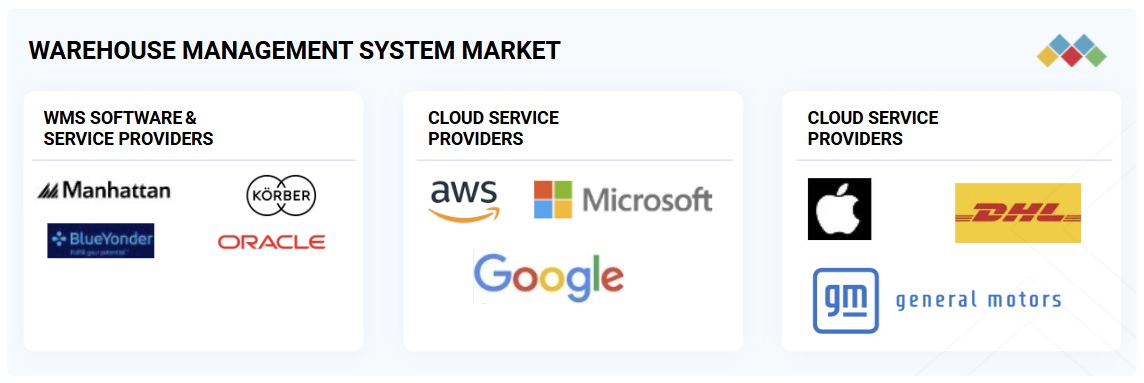
Warehouse Management System Market – Global Forecast To 2030 – ecosystem
Major players profiled in this report are Manhattan Associates (US), Blue Yonder Group, Inc. (US), Körber AG (Germany), Oracle (US), SAP SE (Germany), Infor (US), Ehrhardt + Partner GmbH & Co. KG (Germany), Microsoft (US), Tecsys Inc. (Canada), PTC (US), Reply (Italy), SSI SCHAEFER (Germany), Epicor Software Corporation (US), Extensiv (US), Datapel Systems (Australia), Datapel Systems (Australia), Dematic (US), Generix Group (France), ecovium (Germany), Made4net (US), Microlistics (Australia), Mecalux, S.A. (Spain), Softeon (US), Synergy Logistics Ltd. (UK), Vinculum Solutions Pvt. Ltd. (India), and TECHNOFORTE SOFTWARE PVT. LTD. (India). These leading companies possess a broad portfolio of products and establish a prominent presence in established and emerging markets.
Research Coverage
This report segments the warehouse management system market based on offering, deployment, tier, application, end user, and region. The offering segment includes software and services. The deployment segment includes on-premises and cloud-based. The tier segment includes advanced (Tier 1), intermediate (Tier 2), and basic (Tier 3). The application segment comprises supply chain & logistics optimization, asset & inventory tracking, order fulfillment & distribution, yard & dock management, workforce/labor management, and other applications. The end user segment includes 3PL, automotive, food & beverages, healthcare, chemicals, e-commerce, electricals & electronics, metals & machinery, and other end users. The market has been segmented into four regions: North America, Asia Pacific, Europe, and Rest of the World (RoW).
Reasons to Buy the Report
The report will help the leaders/new entrants in this market with information on the closest approximations of the revenue numbers for the overall market and the subsegments. It will also help stakeholders understand the competitive landscape and gain more insights to position their businesses better and plan suitable go-to-market strategies. The report also helps stakeholders understand the warehouse management system market’s pulse and provides information on key market drivers, restraints, challenges, and opportunities.
Key Benefits of Buying the Report
Analysis of key drivers (Surging e-commerce landscape, Rising adoption of cloud-based WMS solutions, Growing expansion of businesses across diverse distribution channels, Increasing emphasis on optimizing supply chain processes for better customer experience), restraints (Lack of skilled personnel, Elevated implementation and maintenance costs of on-premises WMS for SMEs, Cybersecurity threats ), opportunities (Digital transformation in supply chain, Accelerated industrial growth and infrastructure investments in logistics sector, Embedding video AI technology into WMS), and challenges (Maintaining scalability to accommodate business expansion, Limited awareness resulting in low adoption of WMS solutions among small businesses, Need for regular software upgrades and robust security) influencing the growth of the warehouse management system market
- Product Development/Innovation: Detailed insights on upcoming technologies, research and development activities, and product launches in the warehouse management system market
- Market Development: Comprehensive information about lucrative markets, including the analysis of the warehouse management system market across varied regions
- Market Diversification: Exhaustive information about new products/services, untapped geographies, recent developments, and investments in warehouse management systems
- Competitive Assessment: In-depth assessment of market shares, growth strategies, and service offerings of leading players, including Manhattan Associates (US), Blue Yonder Group, Inc. (US), Körber AG (Germany), Oracle (US), and SAP SE (Germany)