
| 出版社 | MarketsandMarkets |
| 出版年月 | 2025年8月 |
Targeted Protein Degraders Market – Global Forecast To 2035

この調査レポートでは、標的タンパク質分解市場を、タイプ別(分子接着剤(メジグドミド、イベルドミド)、SERD(エラセストラント、ジレデストラント、カミゼストラント)、PROTAC(ベプデゲストラント、バブデガルタミド、BGB-16673、NX-5948、KT-474)、LDD/BiDAC、LYTAC/ATAC、オートファジー標的キメラ)、治療適応症別(腫瘍学、炎症性疾患など)、製剤別(経口製剤および注射剤)、エンドユーザー別(病院および専門クリニック、長期ケア施設および在宅ケア環境)、地域別(北米、ヨーロッパ、アジア太平洋、ラテンアメリカ、中東およびアフリカ)に分類しています。
本レポートは、標的タンパク質分解市場の成長に影響を与える主要な要因(促進要因、制約要因、課題、機会など)に関する詳細な情報を網羅しています。主要業界プレーヤーの詳細な分析により、事業概要、製品、ソリューション、主要戦略、提携、パートナーシップ、契約に関する洞察を提供しています。標的タンパク質分解市場に関連する新規承認/発売、提携、買収、および最近の動向についても取り上げています。
世界の標的タンパク質分解市場は、2025年の推定4億8,000万米ドルから2035年には98億5,000万米ドルに達し、2025年から2035年にかけて年平均成長率(CAGR)35.4%で成長すると予測されています。標的タンパク質分解市場の拡大は、主に資本流入、大手製薬企業との提携、そして複数の適応症への拡大によって牽引されてきました。しかしながら、ヘテロ二機能性化合物のCMC(医薬品製造管理)およびスケールアップの複雑さ、そして知的財産権をめぐる紛争が市場の成長を抑制すると予想されます。
The global targeted protein degradation market is projected to reach USD 9.85 billion by 2035 from an estimated USD 0.48 billion in 2025, at a CAGR of 35.4% from 2025 to 2035. The expansion of the targeted protein degradation market has been predominantly fueled by Capital inflows & big-pharma tie-ups, and multi-indication expansion. However, CMC & scale-up complexity for heterobifunctional and IP disputes are expected to restrain market growth.
Key Companies
Key players in the targeted protein degradation market include Bristol Myers Squibb (US), Arvinas (US), BeiGene (US), Nurix (US), Kymera (US), C4 Therapeutics (US), Stemline Therapeutics (US), AstraZeneca (UK), F. Hoffmann-La Roche Ltd (Switzerland), Bayer (Vividion) (Germany), Captor Therapeutics (Poland), Ranok Therapeutics (US), Pfizer (US), Novartis (Switzerland), and Foghorn Therapeutics (US).
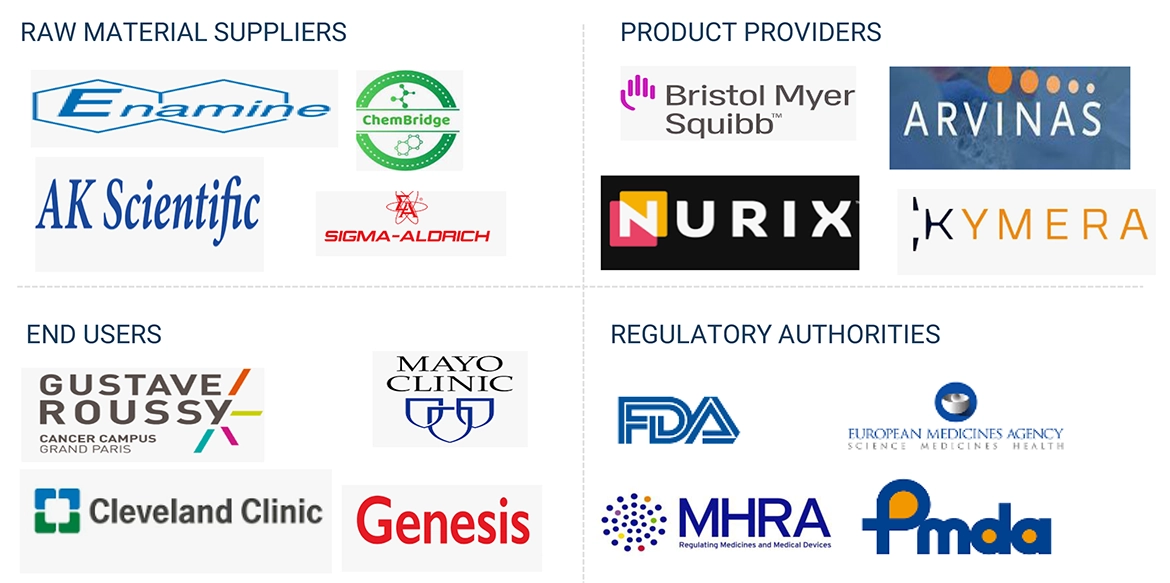
targeted-protein-degradation-analysis-market-Ecosystem
Reasons to buy this report
The report will help market leaders and new entrants by providing them with the closest approximations of the revenue numbers for the overall targeted protein degradation market and its subsegments. It will also help stakeholders better understand the competitive landscape and gain more insights to better position their businesses and make suitable go-to-market strategies. This report will enable stakeholders to understand the market’s pulse and provide them with information on the key market drivers, restraints, opportunities, and challenges.
The report provides insights on the following pointers:
- Analysis of key drivers (Increasing first-In-class approvals with priority/FT designations, expanding multi-indication use, increasing capital inflows and big-pharma collaborations, and technological advancements in degrader design and discovery) restraints (CMC and scale-up complexity for heterobifunctionals, off-target toxicity and cytokine storms in first-gen PROTACs, and IP disputes), opportunities (Growing adoption of CNS and immunology degraders in clinics, development of next-gen ligases with tissue-selective expression, and increasing NDA filing for innovative degraders), and challenges (Limited ligase expression and strict regulatory guidelines) influencing the growth of the market.
- Service Development/Innovation: Detailed insights on upcoming technologies, research & development activities in the targeted protein degradation market
- Market Development: Comprehensive information about lucrative markets across varied regions
- Market Diversification: Exhaustive information about untapped geographies, recent developments, and investments in the targeted protein degradation market
- Competitive Assessment: In-depth assessment of market shares, growth strategies, and product offerings of leading players. A detailed analysis of the key industry players has been done to provide insights into their key strategies, product launches/ approvals, acquisitions, partnerships, agreements, collaborations, other recent developments, investment and funding activities, brand/product comparative analysis, and vendor valuation and financial metrics of the targeted protein degradation market.