
自動車用不凍液市場の規模、シェア、動向、予測 : 液種、技術、車種、流通チャネル、地域別、2026-2034年
Automotive Antifreeze Market Size, Share, Trends and Forecast by Fluid Type, Technology, Vehicle Type, Distribution Channel, and Region, 2026-2034
| 出版 | IMARC Group |
| 出版年月 | 2026年02月 |
| ページ数 | 149 |
| 価格 | 記載以外のライセンスについてはお問合せください |
| シングルユーザ | USD 3,999 |
| 種別 | 英文調査報告書 |
| 商品番号 | SMR-1579115791 |

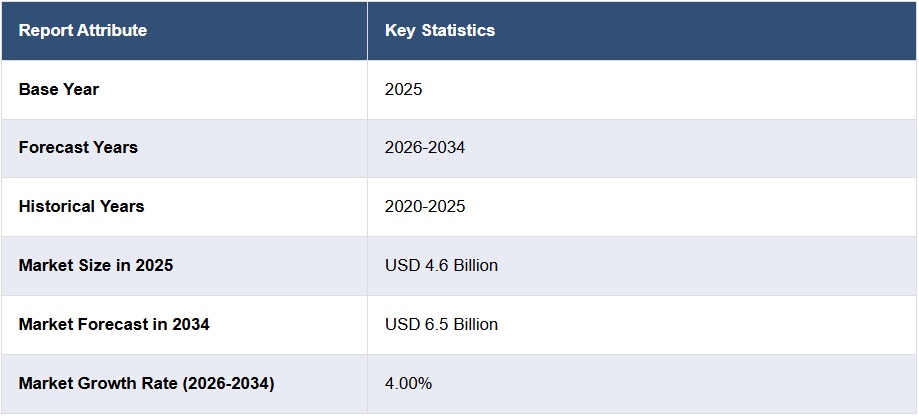
世界の自動車用不凍液市場規模は、2025年には46億米ドルと評価されました。IMARCグループは、今後、市場規模は2034年までに65億米ドルに達し、2026年から2034年にかけて年平均成長率(CAGR)4.00%で成長すると予測しています。現在、アジア太平洋地域が市場を牽引しており、2025年には28.7%を超える市場シェアを占めています。自動車の生産・販売台数の増加、エンジン技術の最近の進歩、電気自動車(EV)の普及拡大、消費者の自動車メンテナンスへの関心の高まりなどにより、市場需要は世界中で急速に拡大しています。
世界の自動車用冷却ソリューション市場は、さまざまな気候条件下でエンジン性能を維持するために不可欠な、効率的な冷却ソリューションへの需要の高まりにより、著しい成長を遂げています。これに伴い、特に新興市場における自動車生産の増加と、電気自動車(EV)の普及拡大が、市場需要をさらに押し上げています。EVはバッテリー温度を調整するための特殊な冷却システムを必要とし、これが市場拡大に貢献しています。さらに、環境に優しい不凍液ソリューションを求める厳しい環境規制がイノベーションを促進し、自動車用不凍液市場の動向に影響を与えています。例えば、2024年2月15日、デュポンは、eモビリティ用途のグリコール精製を強化するために設計されたDuPont AmberLite EV2X樹脂を発表しました。この樹脂は、EV冷却液とフィルターの寿命を延ばし、過酷な条件下でも熱安定性を提供します。さらに、不凍液配合における継続的な技術革新と、拡大する自動車アフターマーケット部門も、市場成長を牽引する重要な要因となっています。
Report Overview
The global automotive antifreeze market size was valued at USD 4.6 Billion in 2025. Looking forward, IMARC Group estimates the market to reach USD 6.5 Billion by 2034, exhibiting a CAGR of 4.00% from 2026-2034. Asia Pacific currently dominates the market, holding a market share of over 28.7% in 2025. The market demand is expanding rapidly across the globe due to rising vehicle production and sales, recent advancements in engine technology, growing adoption of electric vehicles (EVs), and the rising focus on vehicle maintenance among consumers.
The global market is experiencing significant growth due to increasing demand for efficient vehicle cooling solutions, crucial for maintaining engine performance in various climatic conditions. In accordance with this, rising vehicle production, particularly in emerging markets, alongside the growing adoption of electric vehicles (EVs), further drive the market demand. EVs require specialized cooling systems to regulate battery temperatures, contributing to market expansion. Besides this, stringent environmental regulations pushing for eco-friendly antifreeze solutions are stimulating innovation and impacting the automotive antifreeze market trends. For example, on February 15, 2024, DuPont launched its DuPont AmberLite EV2X resin, designed to enhance glycol purification for e-mobility applications. This resin extends the life of EV coolants and filters, offering thermal stability under extreme conditions. Moreover, continual technological advancements in antifreeze formulations, alongside the expanding automotive aftermarket sector, are key factors propelling market growth.
The United States stands out as a key regional market and is majorly driven by the increasing demand for advanced engine cooling solutions that optimize vehicle performance across varying temperatures. Similarly, the rapid growth of the electric vehicle (EV) sector, fueled by federal incentives and consumer preference for sustainable options, is a key factor, as EVs require specialized cooling systems for batteries and powertrains. Additionally, the rising vehicle fleet and the demand for high-performance vehicles with improved engine efficiency further stimulate automotive antifreeze market share. Moreover, increasing environmental awareness and the shift toward biodegradable antifreeze solutions align with regulatory trends, encouraging innovation. Notably, on July 22, 2024, onsemi announced a deal with Volkswagen Group to provide a power system solution for next-gen traction inverters. The EliteSiC M3e MOSFETs improve efficiency and heat management, allowing EVs to drive further on a single charge by integrating a cooling system for better heat control.
Automotive Antifreeze Market Trends:
Rising Vehicle Production and Sales
In its latest automotive antifreeze market outlook, it has been projected that the worldwide automotive industry is growing at a steady pace, this is translating into increased consumption of antifreeze products in the industry. With middle-class populations continuing to grow in every country, car ownership rates also increase. Sales of vehicle units were sold out in 2023, in United States and reached 15,608,386. The growth is directly linked with the increasing demand for automotive fluids, like antifreeze, which helps keep the performance of vehicles. This trend also reflects the increasing demand for automotive antifreeze in commercial vehicle production, fueled by the expansion of logistics, construction, and agriculture industries. As vehicle production is enhanced along with ownership, cooling systems that protect engines from overheating and freezing in extreme climates call for demand to be critical. The automobile maintenance after market, which involves coolant replacement, is increasing. Therefore, the demand for antifreeze products is also rising.
Continual Advancements in Engine Technology
According to the analysis of the automotive antifreeze market, modern engines are powerful, compact, and efficient, and they also work at higher temperatures. As such, they require effective coolants and high-quality antifreeze in this respect. Modern engines, especially turbocharged engines and high-performance engines, require advanced coolants that handle heat management better. Moreover, the latest automotive antifreeze market outlook indicates that under such conditions, conventional water-based coolants may not be enough, thereby creating a huge demand for special antifreeze formulations that can work well at extreme temperatures. Another trend toward downsizing engines to meet emission regulations, which has resulted in the adoption of turbocharged engines, is also augmenting the automotive antifreeze market demand. According to reports, turbochargers can enable downsized engines to achieve an improvement in fuel economy of as much as 20% to 40% in gas and diesel engines, respectively.
Growing Adoption of Electric Vehicles (EVs)
The newest automotive antifreeze market forecast reveals that electric vehicles create new thermal management system requirements, thus improving demand for automotive antifreeze solutions. The IEA reports that more than 3 million electric cars have been sold in the first quarter of 2024. While ICEs use antifreeze mainly to control engine temperatures, EVs require cooling for its battery and motors as well as power electronics. Thermal management is, therefore, very crucial for EV components, and most importantly, the battery pack, which can degrade rapidly if exposed to extreme temperatures. Governments across the globe are stimulating clean energy use and reducing pollution, which led to the hike in electric car adoption. This has made it necessary for new antifreeze formulations targeted at the special needs of an electric powertrain, which further augments the automotive antifreeze market growth.
Automotive Antifreeze Market Report Scope:
| Report Features | Details |
|---|---|
| Base Year of the Analysis | 2025 |
| Historical Period | 2020-2025 |
| Forecast Period | 2026-2034 |
| Units | Billion USD |
| Scope of the Report | Exploration of Historical Trends and Market Outlook, Industry Catalysts and Challenges, Segment-Wise Historical and Future Market Assessment:
|
| Fluid Types Covered | Ethylene Glycol, Propylene Glycol, Glycerine |
| Technologies Covered | Inorganic Additive Technology (IAT), Organic Acid Technology (OAT), Hybrid Organic Acid Technology (HOAT) |
| Vehicle Types Covered | Passenger Vehicle, Commercial Vehicle, Construction Vehicle |
| Distribution Channels Covered | Original Equipment Manufacturers (OEMs), Aftermarket |
| Regions Covered | Asia Pacific, Europe, North America, Latin America, Middle East and Africa |
| Countries Covered | United States, Canada, Germany, France, United Kingdom, Italy, Spain, Russia, China, Japan, India, South Korea, Australia, Indonesia, Brazil, Mexico |
| Companies Covered | AMSOIL Inc., BP p.l.c., Chevron Corporation, Cummins Inc., ExxonMobil Corporation, Fuchs Petrolub SE, Halfords Group PLC, Motul S.A, Prestone Products Corporation, Recochem Inc., Shell plc, TotalEnergies SE, Valvoline Inc., VOLTRONIC GmbH, etc. |
| Customization Scope | 10% Free Customization |
| Post-Sale Analyst Support | 10-12 Weeks |
| Delivery Format | PDF and Excel through Email (We can also provide the editable version of the report in PPT/Word format on special request) |
Automotive Antifreeze Industry Segmentation:
IMARC Group provides an analysis of the key trends in each segment of the global automotive antifreeze market, along with forecast at the global, regional, and country levels from 2026-2034. The market has been categorized based on fluid type, technology, vehicle type, and distribution channel.
Analysis by Fluid Type:
- Ethylene Glycol
- Propylene Glycol
- Glycerine
Ethylene glycol stands as the largest segment in 2025, holding around 60.0% of the market. This dominance is primarily due to its superior properties, such as high boiling and freezing points, which enhance engine protection under extreme temperatures. Ethylene glycol-based antifreeze solutions provide effective heat transfer, preventing engine overheating and freezing in cold weather. Additionally, its low cost, availability, and compatibility with a wide range of vehicle types contribute to its widespread use. As a result, ethylene glycol remains the preferred choice for automotive cooling systems globally.
Analysis by Technology:
- Inorganic Additive Technology (IAT)
- Organic Acid Technology (OAT)
- Hybrid Organic Acid Technology (HOAT)
Organic Acid Technology (OAT) leads the market with around 54.8% of market share in 2025 due to its superior corrosion protection and extended service life. OAT-based coolants are free from silicates, phosphates, and borates, reducing the risk of sludge formation and minimizing wear on engine parts. These coolants offer longer intervals between changes, making them more cost-effective over time. Additionally, OAT is more environmentally friendly compared to traditional coolants, which appeals to environmentally conscious consumers and manufacturers. Therefore, OAT has become the preferred choice for modern vehicles, driving its dominance in the market.
Analysis by Vehicle Type:
- Passenger Vehicle
- Commercial Vehicle
- Construction Vehicle
Commercial vehicle dominates the market in 2025 attributed to their heavy-duty performance requirements and extended operating hours. These vehicles, including trucks, buses, and vans, are exposed to harsher conditions and require antifreeze solutions that ensure engine protection, optimal cooling, and efficient performance over long distances and extended periods. The higher volume of coolant needed for large engines, along with the necessity for reliable, long-lasting antifreeze to reduce maintenance costs, strengthens demand in this sector. Additionally, the rise of logistics, freight transportation, and the increasing number of commercial vehicles worldwide further contribute to the market’s dominance in this segment.
Analysis by Distribution Channel:
- Original Equipment Manufacturers (OEMs)
- Aftermarket
Aftermarket leads the market with around 57.6% of market share in 2025. This dominance is driven by the need for regular maintenance and replacement of antifreeze in vehicles as part of routine servicing. As vehicles age, the coolant often degrades, requiring replenishment or replacement to ensure optimal engine performance and prevent overheating. The aftermarket benefits from a growing number of independent repair shops, retail channels, and online platforms offering a variety of antifreeze products. Additionally, the increasing awareness of vehicle maintenance and extending engine life further supports the strong demand for antifreeze in the aftermarket segment.
Regional Analysis:
- North America
o United States
o Canada
- Asia Pacific
o China
o Japan
o India
o South Korea
o Australia
o Indonesia
o Others
- Europe
o Germany
o France
o United Kingdom
o Italy
o Spain
o Russia
o Others
- Latin America
o Brazil
o Mexico
o Others
- Middle East and Africa
In 2025, Asia-Pacific accounted for the largest market share of over 28.7%. This growth is driven by the rapid expansion of the automotive industry in China, India, and Japan. Rising vehicle production, especially commercial vehicles, and increasing demand for efficient engine cooling systems are significant contributors. Additionally, the region’s robust automotive manufacturing base, coupled with infrastructure development and the adoption of advanced cooling technologies, solidifies its market dominance. Furthermore, the expansion of the aftermarket sector and increased vehicle ownership in emerging economies play pivotal roles. Notably, on December 20, 2024, Airtificial secured its largest-ever contract, valued at over EUR 9 Million, for an advanced electric car compressor assembly line, featuring cutting-edge cooling technologies critical for vehicle battery and cabin cooling.
Key Regional Takeaways:
United States Automotive Antifreeze Market Analysis
The U.S. automotive antifreeze market is expanding due to increasing vehicle ownership, rising production of passenger and commercial vehicles, and strict regulations on emissions and engine efficiency. People are prioritizing advanced cooling solutions to improve engine longevity, reduce emissions, and enhance fuel efficiency, driving demand for high-performance antifreeze formulations. Stringent environmental policies by the Environmental Protection Agency (EPA) and the Department of Transportation (DOT) are prompting automakers to adopt long-life coolants with reduced toxicity and improved heat transfer properties. In addition, increasing preferences for hybrid and electric vehicles (EVs) is reshaping antifreeze demand, as thermal management remains critical for battery performance and longevity. Innovations in EV-specific coolants, including glycol-based and non-conductive formulations, are gaining traction among manufacturers and aftermarket suppliers. Besides this, the increasing number of miles driven per vehicle is fueling the need for regular coolant replacements and maintenance, sustaining demand from service centers and retailers. The presence of major automotive manufacturers and aftermarket service providers in the U.S. is another key factor. Companies are focusing on developing biodegradable, low-toxicity antifreeze solutions to comply with shifting sustainability goals. The rise of fleet management services and shared mobility solutions, such as ride-hailing and rental services, is also accelerating coolant consumption due to higher vehicle utilization rates. As per reports, Uber and Lyft, ride-hailing services in USA have around 77.6 million users in 2024.
Europe Automotive Antifreeze Market Analysis
Strict environmental regulations, the rising adoption of electric vehicles, and a strong presence of leading automobile manufacturers is impelling the market growth. Stringent emission norms imposed by the European Union (EU) are prompting automakers to improve engine efficiency and develop advanced cooling technologies. The transition toward low-emission and hybrid vehicles is significantly influencing the demand for high-performance antifreeze solutions tailored for modern powertrains. In addition, cold climatic conditions in several European countries, including Germany, France, and Scandinavia, drive the need for high-quality antifreeze to prevent engine freezing during harsh winters. At the same time, heat waves in Southern Europe are increasing demand for effective cooling solutions, particularly in countries like Spain and Italy. The growing emphasis on all-weather antifreeze products that can function in varying climatic conditions is shaping product innovation. Moreover, the expanding electric vehicle (EV) market, particularly in Norway, the Netherlands, and Germany, is reshaping antifreeze demand. According to the IEA, new electric car registrations reached nearly 3.2 million in 2023 in Europe, increasing by almost 20% relative to 2022. Advanced thermal management solutions are essential for regulating battery temperatures and ensuring optimal EV performance. The increasing adoption of glycol-based coolants for lithium-ion batteries is a key driver, as battery longevity and safety depend on efficient cooling systems. Europe’s strong automotive aftermarket sector, with well-established service networks and maintenance centers, is also catalzying demand for antifreeze replacements.
Asia Pacific Automotive Antifreeze Market Analysis
The Asia Pacific market remains influenced by rapid urbanization, increasing vehicle production, and rising disposable incomes that have led to greater demand for automobiles in China, India, Japan, and Southeast Asian countries. According to the PIB, it has predicted by 2030 there will be more than 40% of India’s population are expected to be living in cities. In addition, the growing middle-class populations coupled with better infrastructure for roads will accelerate the acquisition of vehicles leading to increased usage of antifreeze and coolants. Furthermore, the expanding automotive manufacturing, especially in the countries of China and India whose production volumes have been among the highest in the world, continues to support this market growth. Apart from this, increased temperatures across several Asian Pacific regions, particularly tropical and subtropical, mean cooling needs a proper cooling mechanism. Therefore, the high-performance antifreeze is adopted there. In cold climates, in particular, in northern China and Japan, freezing protection requires an antifreeze. Climate condition differences throughout this region have spurred the production of multifunctional coolant formulations with capabilities for severe temperature swings. In addition, the stringent emission standards and regulations in countries like China and India are forcing car manufacturers to look for better-performing engines. This is expected to increase demand for high-performance antifreeze formulations. Greater investments in research and development (R&D) by local as well as international players are adding momentum to innovation in coolant technology in the region.
Latin America Automotive Antifreeze Market Analysis
The Latin American automotive antifreeze market is expanding due to rising vehicle ownership, growing automotive production, and extreme temperature variations across the region. In countries like Brazil, Mexico, and Argentina, an increasing middle-class population and improving road infrastructure are contributing to higher vehicle sales, fueling demand for antifreeze products. The expanding commercial vehicle segment, driven by logistics growth, is also influencing market dynamics. According to the reports, commercial vehicle production in Brazil reached approximately 543,226 units in 2023. Additionally, climate conditions in Latin America, ranging from hot and humid regions in Brazil to colder areas in Argentina, necessitate diverse antifreeze formulations. The growing preference for extended-life coolants is evident among fleet operators looking to reduce maintenance costs. Automotive industry growth, coupled with increasing aftermarket service centers, is supporting antifreeze demand. Additionally, advancements in engine technology, including turbocharging and downsized engines, are increasing the thermal stress on cooling systems, necessitating superior antifreeze formulations.
Middle East and Africa Automotive Antifreeze Market Analysis
The increasing vehicle sales and growing construction and logistics sectors are driving the market growth. According to reports, total sales of vehicles in Saudi Arabia were 729,466 units (+16.9%) in 2023. The high temperatures in Gulf countries such as Saudi Arabia and the UAE require more advanced cooling systems to avoid engine overheating. With expanding infrastructure projects and widening logistics, commercial vehicle usage is increasing, which also means increased antifreeze usage. Fleet operators prefer long-lasting coolant formulation to decrease maintenance costs, particularly under adverse environmental conditions. African regions, especially countries like South Africa and Nigeria, are gaining popularity due to increasing urbanization and better roads. The growth of the aftermarket segment, with service centers providing niche coolant products, is supporting the market growth.
Competitive Landscape:
The automotive antifreeze market is highly competitive with major players trying to innovate and cater to the needs of the automotive industry. Companies are looking at creating more advanced, environmentally friendly formulations for antifreeze, high-performance, thermal stability, and corrosion resistance. Most offer pre-diluted and ready-to-use solutions for added convenience and minimizing errors. In the face of growing electric vehicles, companies are producing dedicated coolants for EV batteries and powertrains. Key strategies include forming strategic partnerships with OEMs and expanding into markets. For example, on June 18, 2024, Recochem acquired KIK Consumer Products’ Auto Care business, including Prestone and Holts, which will augment its global automotive solutions and expand its portfolio of antifreeze and coolant products.
The report provides a comprehensive analysis of the competitive landscape in the automotive antifreeze market with detailed profiles of all major companies, including:
- AMSOIL Inc.
- BP p.l.c.
- Chevron Corporation
- Cummins Inc.
- ExxonMobil Corporation
- Fuchs Petrolub SE
- Halfords Group PLC
- Motul S.A
- Prestone Products Corporation
- Recochem Inc.
- Shell plc
- TotalEnergies SE
- Valvoline Inc.
- VOLTRONIC GmbH
Key Questions Answered in This Report
- How big is the automotive antifreeze market?
- What is the future outlook of automotive antifreeze market?
- What are the key factors driving the automotive antifreeze market?
- Which region accounts for the largest automotive antifreeze market share?
- Which are the leading companies in the global automotive antifreeze market?
Table of Contents
1 Preface
2 Scope and Methodology
2.1 Objectives of the Study
2.2 Stakeholders
2.3 Data Sources
2.3.1 Primary Sources
2.3.2 Secondary Sources
2.4 Market Estimation
2.4.1 Bottom-Up Approach
2.4.2 Top-Down Approach
2.5 Forecasting Methodology
3 Executive Summary
4 Introduction
4.1 Overview
4.2 Key Industry Trends
5 Global Automotive Antifreeze Market
5.1 Market Overview
5.2 Market Performance
5.3 Impact of COVID-19
5.4 Market Forecast
6 Market Breakup by Fluid Type
6.1 Ethylene Glycol
6.1.1 Market Trends
6.1.2 Market Forecast
6.2 Propylene Glycol
6.2.1 Market Trends
6.2.2 Market Forecast
6.3 Glycerine
6.3.1 Market Trends
6.3.2 Market Forecast
7 Market Breakup by Technology
7.1 Inorganic Additive Technology (IAT)
7.1.1 Market Trends
7.1.2 Market Forecast
7.2 Organic Acid Technology (OAT)
7.2.1 Market Trends
7.2.2 Market Forecast
7.3 Hybrid Organic Acid Technology (HOAT)
7.3.1 Market Trends
7.3.2 Market Forecast
8 Market Breakup by Vehicle Type
8.1 Passenger Vehicle
8.1.1 Market Trends
8.1.2 Market Forecast
8.2 Commercial Vehicle
8.2.1 Market Trends
8.2.2 Market Forecast
8.3 Construction Vehicle
8.3.1 Market Trends
8.3.2 Market Forecast
9 Market Breakup by Distribution Channel
9.1 Original Equipment Manufacturers (OEMs)
9.1.1 Market Trends
9.1.2 Market Forecast
9.2 Aftermarket
9.2.1 Market Trends
9.2.2 Market Forecast
10 Market Breakup by Region
10.1 North America
10.1.1 United States
10.1.1.1 Market Trends
10.1.1.2 Market Forecast
10.1.2 Canada
10.1.2.1 Market Trends
10.1.2.2 Market Forecast
10.2 Asia-Pacific
10.2.1 China
10.2.1.1 Market Trends
10.2.1.2 Market Forecast
10.2.2 Japan
10.2.2.1 Market Trends
10.2.2.2 Market Forecast
10.2.3 India
10.2.3.1 Market Trends
10.2.3.2 Market Forecast
10.2.4 South Korea
10.2.4.1 Market Trends
10.2.4.2 Market Forecast
10.2.5 Australia
10.2.5.1 Market Trends
10.2.5.2 Market Forecast
10.2.6 Indonesia
10.2.6.1 Market Trends
10.2.6.2 Market Forecast
10.2.7 Others
10.2.7.1 Market Trends
10.2.7.2 Market Forecast
10.3 Europe
10.3.1 Germany
10.3.1.1 Market Trends
10.3.1.2 Market Forecast
10.3.2 France
10.3.2.1 Market Trends
10.3.2.2 Market Forecast
10.3.3 United Kingdom
10.3.3.1 Market Trends
10.3.3.2 Market Forecast
10.3.4 Italy
10.3.4.1 Market Trends
10.3.4.2 Market Forecast
10.3.5 Spain
10.3.5.1 Market Trends
10.3.5.2 Market Forecast
10.3.6 Russia
10.3.6.1 Market Trends
10.3.6.2 Market Forecast
10.3.7 Others
10.3.7.1 Market Trends
10.3.7.2 Market Forecast
10.4 Latin America
10.4.1 Brazil
10.4.1.1 Market Trends
10.4.1.2 Market Forecast
10.4.2 Mexico
10.4.2.1 Market Trends
10.4.2.2 Market Forecast
10.4.3 Others
10.4.3.1 Market Trends
10.4.3.2 Market Forecast
10.5 Middle East and Africa
10.5.1 Market Trends
10.5.2 Market Breakup by Country
10.5.3 Market Forecast
11 SWOT Analysis
11.1 Overview
11.2 Strengths
11.3 Weaknesses
11.4 Opportunities
11.5 Threats
12 Value Chain Analysis
13 Porters Five Forces Analysis
13.1 Overview
13.2 Bargaining Power of Buyers
13.3 Bargaining Power of Suppliers
13.4 Degree of Competition
13.5 Threat of New Entrants
13.6 Threat of Substitutes
14 Price Analysis
15 Competitive Landscape
15.1 Market Structure
15.2 Key Players
15.3 Profiles of Key Players
15.3.1 AMSOIL Inc.
15.3.1.1 Company Overview
15.3.1.2 Product Portfolio
15.3.2 BP p.l.c.
15.3.2.1 Company Overview
15.3.2.2 Product Portfolio
15.3.2.3 Financials
15.3.2.4 SWOT Analysis
15.3.3 Chevron Corporation
15.3.3.1 Company Overview
15.3.3.2 Product Portfolio
15.3.3.3 Financials
15.3.3.4 SWOT Analysis
15.3.4 Cummins Inc.
15.3.4.1 Company Overview
15.3.4.2 Product Portfolio
15.3.4.3 Financials
15.3.4.4 SWOT Analysis
15.3.5 ExxonMobil Corporation
15.3.5.1 Company Overview
15.3.5.2 Product Portfolio
15.3.5.3 Financials
15.3.5.4 SWOT Analysis
15.3.6 Fuchs Petrolub SE
15.3.6.1 Company Overview
15.3.6.2 Product Portfolio
15.3.6.3 Financials
15.3.6.4 SWOT Analysis
15.3.7 Halfords Group PLC
15.3.7.1 Company Overview
15.3.7.2 Product Portfolio
15.3.7.3 Financials
15.3.7.4 SWOT Analysis
15.3.8 Motul S.A
15.3.8.1 Company Overview
15.3.8.2 Product Portfolio
15.3.9 Prestone Products Corporation
15.3.9.1 Company Overview
15.3.9.2 Product Portfolio
15.3.10 Recochem Inc.
15.3.10.1 Company Overview
15.3.10.2 Product Portfolio
15.3.11 Shell plc
15.3.11.1 Company Overview
15.3.11.2 Product Portfolio
15.3.11.3 Financials
15.3.12 TotalEnergies SE
15.3.12.1 Company Overview
15.3.12.2 Product Portfolio
15.3.12.3 Financials
15.3.12.4 SWOT Analysis
15.3.13 Valvoline Inc.
15.3.13.1 Company Overview
15.3.13.2 Product Portfolio
15.3.13.3 Financials
15.3.13.4 SWOT Analysis
15.3.14 VOLTRONIC GmbH
15.3.14.1 Company Overview
15.3.14.2 Product Portfolio
List of Tables
Table 1: Global: Automotive Antifreeze Market: Key Industry Highlights, 2025 and 2034
Table 2: Global: Automotive Antifreeze Market Forecast: Breakup by Fluid Type (in Million USD), 2026-2034
Table 3: Global: Automotive Antifreeze Market Forecast: Breakup by Technology (in Million USD), 2026-2034
Table 4: Global: Automotive Antifreeze Market Forecast: Breakup by Vehicle Type (in Million USD), 2026-2034
Table 5: Global: Automotive Antifreeze Market Forecast: Breakup by Distribution Channel (in Million USD), 2026-2034
Table 6: Global: Automotive Antifreeze Market Forecast: Breakup by Region (in Million USD), 2026-2034
Table 7: Global: Automotive Antifreeze Market: Competitive Structure
Table 8: Global: Automotive Antifreeze Market: Key Players
List of Figures
Figure 1: Global: Automotive Antifreeze Market: Major Drivers and Challenges
Figure 2: Global: Automotive Antifreeze Market: Sales Value (in Billion USD), 2020-2025
Figure 3: Global: Automotive Antifreeze Market Forecast: Sales Value (in Billion USD), 2026-2034
Figure 4: Global: Automotive Antifreeze Market: Breakup by Fluid Type (in %), 2025
Figure 5: Global: Automotive Antifreeze Market: Breakup by Technology (in %), 2025
Figure 6: Global: Automotive Antifreeze Market: Breakup by Vehicle Type (in %), 2025
Figure 7: Global: Automotive Antifreeze Market: Breakup by Distribution Channel (in %), 2025
Figure 8: Global: Automotive Antifreeze Market: Breakup by Region (in %), 2025
Figure 9: Global: Automotive Antifreeze (Ethylene Glycol) Market: Sales Value (in Million USD), 2020 & 2025
Figure 10: Global: Automotive Antifreeze (Ethylene Glycol) Market Forecast: Sales Value (in Million USD), 2026-2034
Figure 11: Global: Automotive Antifreeze (Propylene Glycol) Market: Sales Value (in Million USD), 2020 & 2025
Figure 12: Global: Automotive Antifreeze (Propylene Glycol) Market Forecast: Sales Value (in Million USD), 2026-2034
Figure 13: Global: Automotive Antifreeze (Glycerine) Market: Sales Value (in Million USD), 2020 & 2025
Figure 14: Global: Automotive Antifreeze (Glycerine) Market Forecast: Sales Value (in Million USD), 2026-2034
Figure 15: Global: Automotive Antifreeze (Inorganic Additive Technology (IAT)) Market: Sales Value (in Million USD), 2020 & 2025
Figure 16: Global: Automotive Antifreeze (Inorganic Additive Technology (IAT)) Market Forecast: Sales Value (in Million USD), 2026-2034
Figure 17: Global: Automotive Antifreeze (Organic Acid Technology (OAT)) Market: Sales Value (in Million USD), 2020 & 2025
Figure 18: Global: Automotive Antifreeze (Organic Acid Technology (OAT)) Market Forecast: Sales Value (in Million USD), 2026-2034
Figure 19: Global: Automotive Antifreeze (Hybrid Organic Acid Technology (HOAT)) Market: Sales Value (in Million USD), 2020 & 2025
Figure 20: Global: Automotive Antifreeze (Hybrid Organic Acid Technology (HOAT)) Market Forecast: Sales Value (in Million USD), 2026-2034
Figure 21: Global: Automotive Antifreeze (Passenger Vehicle) Market: Sales Value (in Million USD), 2020 & 2025
Figure 22: Global: Automotive Antifreeze (Passenger Vehicle) Market Forecast: Sales Value (in Million USD), 2026-2034
Figure 23: Global: Automotive Antifreeze (Commercial Vehicle) Market: Sales Value (in Million USD), 2020 & 2025
Figure 24: Global: Automotive Antifreeze (Commercial Vehicle) Market Forecast: Sales Value (in Million USD), 2026-2034
Figure 25: Global: Automotive Antifreeze (Construction Vehicle) Market: Sales Value (in Million USD), 2020 & 2025
Figure 26: Global: Automotive Antifreeze (Construction Vehicle) Market Forecast: Sales Value (in Million USD), 2026-2034
Figure 27: Global: Automotive Antifreeze (Original Equipment Manufacturers (OEMs)) Market: Sales Value (in Million USD), 2020 & 2025
Figure 28: Global: Automotive Antifreeze (Original Equipment Manufacturers (OEMs)) Market Forecast: Sales Value (in Million USD), 2026-2034
Figure 29: Global: Automotive Antifreeze (Aftermarket) Market: Sales Value (in Million USD), 2020 & 2025
Figure 30: Global: Automotive Antifreeze (Aftermarket) Market Forecast: Sales Value (in Million USD), 2026-2034
Figure 31: North America: Automotive Antifreeze Market: Sales Value (in Million USD), 2020 & 2025
Figure 32: North America: Automotive Antifreeze Market Forecast: Sales Value (in Million USD), 2026-2034
Figure 33: United States: Automotive Antifreeze Market: Sales Value (in Million USD), 2020 & 2025
Figure 34: United States: Automotive Antifreeze Market Forecast: Sales Value (in Million USD), 2026-2034
Figure 35: Canada: Automotive Antifreeze Market: Sales Value (in Million USD), 2020 & 2025
Figure 36: Canada: Automotive Antifreeze Market Forecast: Sales Value (in Million USD), 2026-2034
Figure 37: Asia-Pacific: Automotive Antifreeze Market: Sales Value (in Million USD), 2020 & 2025
Figure 38: Asia-Pacific: Automotive Antifreeze Market Forecast: Sales Value (in Million USD), 2026-2034
Figure 39: China: Automotive Antifreeze Market: Sales Value (in Million USD), 2020 & 2025
Figure 40: China: Automotive Antifreeze Market Forecast: Sales Value (in Million USD), 2026-2034
Figure 41: Japan: Automotive Antifreeze Market: Sales Value (in Million USD), 2020 & 2025
Figure 42: Japan: Automotive Antifreeze Market Forecast: Sales Value (in Million USD), 2026-2034
Figure 43: India: Automotive Antifreeze Market: Sales Value (in Million USD), 2020 & 2025
Figure 44: India: Automotive Antifreeze Market Forecast: Sales Value (in Million USD), 2026-2034
Figure 45: South Korea: Automotive Antifreeze Market: Sales Value (in Million USD), 2020 & 2025
Figure 46: South Korea: Automotive Antifreeze Market Forecast: Sales Value (in Million USD), 2026-2034
Figure 47: Australia: Automotive Antifreeze Market: Sales Value (in Million USD), 2020 & 2025
Figure 48: Australia: Automotive Antifreeze Market Forecast: Sales Value (in Million USD), 2026-2034
Figure 49: Indonesia: Automotive Antifreeze Market: Sales Value (in Million USD), 2020 & 2025
Figure 50: Indonesia: Automotive Antifreeze Market Forecast: Sales Value (in Million USD), 2026-2034
Figure 51: Others: Automotive Antifreeze Market: Sales Value (in Million USD), 2020 & 2025
Figure 52: Others: Automotive Antifreeze Market Forecast: Sales Value (in Million USD), 2026-2034
Figure 53: Europe: Automotive Antifreeze Market: Sales Value (in Million USD), 2020 & 2025
Figure 54: Europe: Automotive Antifreeze Market Forecast: Sales Value (in Million USD), 2026-2034
Figure 55: Germany: Automotive Antifreeze Market: Sales Value (in Million USD), 2020 & 2025
Figure 56: Germany: Automotive Antifreeze Market Forecast: Sales Value (in Million USD), 2026-2034
Figure 57: France: Automotive Antifreeze Market: Sales Value (in Million USD), 2020 & 2025
Figure 58: France: Automotive Antifreeze Market Forecast: Sales Value (in Million USD), 2026-2034
Figure 59: United Kingdom: Automotive Antifreeze Market: Sales Value (in Million USD), 2020 & 2025
Figure 60: United Kingdom: Automotive Antifreeze Market Forecast: Sales Value (in Million USD), 2026-2034
Figure 61: Italy: Automotive Antifreeze Market: Sales Value (in Million USD), 2020 & 2025
Figure 62: Italy: Automotive Antifreeze Market Forecast: Sales Value (in Million USD), 2026-2034
Figure 63: Spain: Automotive Antifreeze Market: Sales Value (in Million USD), 2020 & 2025
Figure 64: Spain: Automotive Antifreeze Market Forecast: Sales Value (in Million USD), 2026-2034
Figure 65: Russia: Automotive Antifreeze Market: Sales Value (in Million USD), 2020 & 2025
Figure 66: Russia: Automotive Antifreeze Market Forecast: Sales Value (in Million USD), 2026-2034
Figure 67: Others: Automotive Antifreeze Market: Sales Value (in Million USD), 2020 & 2025
Figure 68: Others: Automotive Antifreeze Market Forecast: Sales Value (in Million USD), 2026-2034
Figure 69: Latin America: Automotive Antifreeze Market: Sales Value (in Million USD), 2020 & 2025
Figure 70: Latin America: Automotive Antifreeze Market Forecast: Sales Value (in Million USD), 2026-2034
Figure 71: Brazil: Automotive Antifreeze Market: Sales Value (in Million USD), 2020 & 2025
Figure 72: Brazil: Automotive Antifreeze Market Forecast: Sales Value (in Million USD), 2026-2034
Figure 73: Mexico: Automotive Antifreeze Market: Sales Value (in Million USD), 2020 & 2025
Figure 74: Mexico: Automotive Antifreeze Market Forecast: Sales Value (in Million USD), 2026-2034
Figure 75: Others: Automotive Antifreeze Market: Sales Value (in Million USD), 2020 & 2025
Figure 76: Others: Automotive Antifreeze Market Forecast: Sales Value (in Million USD), 2026-2034
Figure 77: Middle East and Africa: Automotive Antifreeze Market: Sales Value (in Million USD), 2020 & 2025
Figure 78: Middle East and Africa: Automotive Antifreeze Market: Breakup by Country (in %), 2025
Figure 79: Middle East and Africa: Automotive Antifreeze Market Forecast: Sales Value (in Million USD), 2026-2034
Figure 80: Global: Automotive Antifreeze Industry: SWOT Analysis
Figure 81: Global: Automotive Antifreeze Industry: Value Chain Analysis
Figure 82: Global: Automotive Antifreeze Industry: Porter’s Five Forces Analysis