
| 出版社 | MarketsandMarkets |
| 出版年月 | 2025年8月 |
Sports Analytics Market – Global Forecast to 2030

この調査レポートでは、スポーツ分析市場を、提供内容(ソリューション(パフォーマンス分析ソフトウェア、ビデオ分析プラットフォーム、予測分析ツール、その他のソリューション))とサービス(プロフェッショナルサービス(トレーニングおよびコンサルティングサービス、システム統合および実装サービス、サポートおよび保守サービス)およびマネージドサービス)、導入モード(クラウド、オンプレミス、ハイブリッド)、スポーツの種類(チームスポーツ(クリケット、サッカー、アメリカンフットボール/ラグビー、バスケットボール、野球、ホッケー、バレーボール)、個人スポーツ(テニス、陸上競技(トラック&フィールド)、ゴルフ、水泳、サイクリング、体操、格闘技(ボクシング、総合格闘技(MMA)、レスリング、柔道)、その他の個人スポーツ)、レーシングスポーツ(F1、MotoGP、全米ストックカー・オート・レーシング(NASCAR)、競馬、その他のレーシングスポーツ)、オンラインまたはバーチャルスポーツ(ファンタジースポーツ、オンラインベッティング、デイリーファンタジーリーグ、オンラインポーカー&カードゲーム、その他のオンラインスポーツ)、新興スポーツ(デジタルエクストリームスポーツ、パラリンピックスポーツ、その他の新興スポーツ)に基づいて分類しています。スポーツ))、用途 (フィールド内 (選手の負荷と動作の分析、選手の追跡と動作、負傷の予測と健康状態の監視、生体力学的および運動学的分析、トレーニングと回復の最適化、試合のフィットネスとパフォーマンスのベンチマーク、およびその他のフィールド内アプリケーション)) とオフフィールド (対戦相手のスカウティング、ゲーム中の意思決定サポート、ファンのエンゲージメントと体験、スポンサーシップとマーケティングの ROI、商品販売の最適化、ファンの行動の追跡、およびその他のフィールド外アプリケーション))、エンド ユーザー (スポーツ チームとクラブ、スポーツ アカデミーと大学、スポーツ リーグ/協会と統括団体、放送局とメディア企業、スポンサーシップとマーケティング エージェンシー、スポーツ用品メーカー、広告スポーツ ベッティング企業)、および地域 (北米、ヨーロッパ、アジア太平洋、中東とアフリカ、ラテン アメリカ)。
本レポートは、スポーツアナリティクス市場の成長に影響を与える推進要因、制約要因、課題、そして機会に関する詳細な情報を網羅しています。主要プレーヤーの詳細な分析により、事業概要、ソリューション、サービス、主要戦略、契約、パートナーシップ、合意、製品・サービスの発売、合併・買収、そして市場に関連する最近の動向に関する洞察を提供しています。また、市場エコシステムにおける新興スタートアップ企業の競合分析も網羅しています。
スポーツ分析市場は力強い成長を遂げており、2025年の22億9,000万米ドルから2030年には47億5,000万米ドルに達し、予測期間中の年平均成長率(CAGR)は15.7%と予測されています。競争の激化に伴い、スポーツ組織は観察に基づくコーチングからデータ主導のパフォーマンスモデルへと移行しています。高度な分析プラットフォームは、トレーニング負荷の最適化、バイオメカニクスのモニタリング、戦術の改良において中心的な役割を果たしています。AIを活用したツールは、リアルタイムの生理学的データとゲームプレイデータを、精密なコーチングと怪我の軽減に役立つ実用的なインサイトに変換します。分析を日常業務に組み込むことで、チームは着実なパフォーマンス向上を実現し、選手育成を加速させ、プレッシャーの下で情報に基づいた調整を行うことができます。この構造化された分析重視のアプローチは、クラブや連盟が人材を管理し、成果を最大化し、長期的な競争優位性を維持する方法を変革しています。
The sports analytics market is experiencing strong growth, projected to rise from USD 2.29 billion in 2025 to USD 4.75 billion by 2030, at a CAGR of 15.7% during the forecast period. As competitive demands intensify, sports organizations are shifting from observational coaching to data-driven performance models. Advanced analytics platforms are now central to optimizing training loads, monitoring biomechanics, and refining tactics. AI-powered tools convert real-time physiological and gameplay data into actionable insights that support precision coaching and injury mitigation. By embedding analytics into day-to-day operations, teams unlock consistent performance gains, accelerate player development, and make informed adjustments under pressure. This structured, analytics-first approach is transforming how clubs and federations manage talent, maximize output, and sustain long-term competitive advantages.
The report includes a study of key players offering sports analytics. The major market players include IBM (US), SAS Institute (US), SAP (Germany), HCL Technologies (India), Salesforce (US), Zebra Technologies (US), Catapult (Australia), EXL (US), Chyron (US), GlobalStep (US), Stats Perform (US), Exasol (Germany), DataArt (US), TruMedia Networks (US), Orreco (Ireland), Sportradar (Switzerland), Whoop (US), Kitman Labs (Ireland), Hudl (US), Trace (US), Kinduct Technologies (Canada), Oracle (US), Uplift Labs (US), SportLogiq (Canada), SportAnalytics (Serbia), L2P Limited (UK), Quant4Sport (UK), Veo Technologies (Denmark), Carv (UK), Real Sports AI (UK), Vekta (US), Zone14 (Austria), SportAI (US), BodyPro (US), HIT Coach (US), Pulse (Various), PunchLab (Italy), Marelli (Italy), MoTeC (Australia), Race Technologies (US), and PandaScore (France).
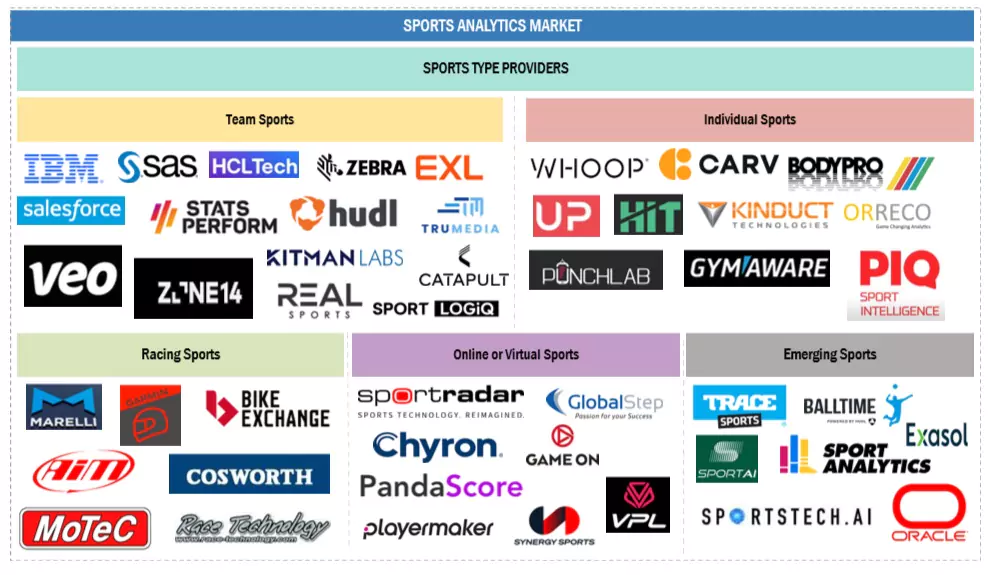
sports-analytics-market-new-ecosystem
Key Benefits of Buying the Report
The report will provide market leaders and new entrants with information on the closest approximations of the revenue numbers for the overall sports analytics market and its subsegments. It will help stakeholders understand the competitive landscape and gain more insights to better position their businesses and plan suitable go-to-market strategies. It will also help stakeholders understand the market’s pulse and provide them with information on key market drivers, restraints, challenges, and opportunities.
The report provides insights into the following pointers:
- Analysis of key drivers (Operationalize Advanced Analytics for Performance Enhancement, Leveraging Fan Data to Personalize and Monetize Consumer Engagement, Leverage Predictive Analytics to Drive Growth in Betting and Fantasy Sports), restraints (Persistent Data Silos Undermine Platform Level Analytics Consolidation), opportunities (Enable Scalable Performance Optimization in Sports through Modular Analytics Deployment, Advance Tactical Precision and Player Development through Specialized Esports Analytics), and challenges (Ensure Data Confidentiality and Integrity with Secure Architectures and Access Control Protocols, Rapid Software Evolution Limits Analytics Accessibility for Smaller Teams)
- Product Development/Innovation: Detailed insights into upcoming technologies, research & development activities, and product & service launches in sports Analytics
- Market Development: Comprehensive information about lucrative markets – analyzing the market across varied regions
- Market Diversification: Exhaustive information about new solutions & services, untapped geographies, recent developments, and investments in the Sports Analytics market
- Competitive Assessment: In-depth assessment of market shares, growth strategies and service offerings of leading players such as IBM (US), SAS Institute (US), SAP (Germany), HCL Technologies (India), Salesforce (US), Zebra Technologies (US), Catapult (Australia), EXL (US), Chyron (US), GlobalStep (US), Stats Perform (US), Exasol (Germany), DataArt (US), TruMedia Networks (US), Orreco (Ireland), Sportradar (Switzerland), Whoop (US), Kitman Labs (Ireland), Hudl (US), Trace (US), Kinduct Technologies (Canada), Oracle (US), Uplift Labs (US), SportLogiq (Canada), SportAnalytics (Serbia), L2P Limited (UK), Quant4Sport (UK), Veo Technologies (Denmark), Carv (UK), Real Sports AI (UK), Vekta (US), Zone14 (Austria), SportAI (US), BodyPro (US), HIT Coach (US), Pulse (Various), PunchLab (Italy), Marelli (Italy), MoTeC (Australia), Race Technologies (US), and PandaScore (France).
The report also helps stakeholders understand the pulse of the sports analytics market and provides them with information on key market drivers, restraints, challenges, and opportunities.