
| 出版社 | Daedal Research |
| 出版年月 | 2025年11月 |
Global Consumer Electronics Market Trends with Impact Analysis

世界のコンシューマーエレクトロニクス市場:製品別(電話、コンピューティング、テレビ、ラジオ、マルチメディア、テレビ周辺機器、ドローン)、アプリケーション別(個人向けおよび業務用)、流通チャネル別(オフラインおよびオンライン)、地域規模別、COVID-19の影響による動向、2029年までの予測
2023年の世界のコンシューマー・エレクトロニクス市場規模は1兆300億米ドルで、2029年には1兆5700億米ドルに達すると予想されています。コンシューマー・エレクトロニクスとは、消費者が個人的に使用するために設計・製造される電子機器やガジェットの広範なカテゴリーを指します。スマートフォン、コンピューター、テレビ、オーディオシステム、ゲーム機、ウェアラブルデバイス、家電製品など、これらの製品は、コミュニケーション、エンターテイメント、生産性、利便性といったニーズに応えます。ワイヤレス接続、タッチスクリーン、人工知能といった先進技術が組み込まれています。
近年、5Gネットワークの登場とIoTの台頭を背景に、民生用電子機器の需要が高まっています。新たなトレンドとして、メーカーは消費者の期待に応えるため、持続可能な事業慣行を事業に取り入れることを選択しています。消費者の嗜好の変化に伴い、民生用電子機器市場は特定のニッチ市場での提供を拡充することが期待されています。新たなマーケティング手法や高度なイノベーション、そしてソーシャルコマースの台頭は、今後数年間で民生用電子機器市場をさらに活性化させるでしょう。また、コネクテッドホームやインテリジェントホームへのトレンドの高まりは、新たなスマートデバイスを市場に投入し、市場の成長を牽引し続けています。民生用電子機器市場はすでに成熟期を迎えていますが、新たな技術の導入が数量成長を支えると予想されています。世界の民生用電子機器市場は、2024~2029年の予測期間中に7.37%のCAGRで成長すると予測されています。
Report Overview
The global consumer electronics market value in 2023 stood at US$1.03 trillion, and is likely to reach US$1.57 trillion by 2029. Consumer electronics refers to a broad category of electronic devices and gadgets that are designed and manufactured for personal use by consumers. These products, including smartphones, computers, televisions, audio systems, gaming consoles, wearable devices, and home appliances, cater to communication, entertainment, productivity, and convenience needs. They incorporate advanced technologies like wireless connectivity, touchscreens, and artificial intelligence.
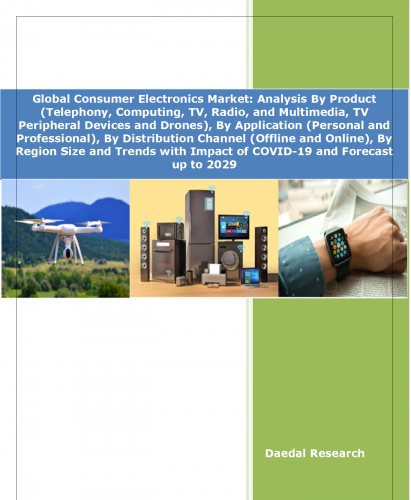
Global Consumer Electronics Market Size and Trends with Impact
In recent years, the demand for consumer electronics has been growing, driven by the emergence of 5G networks and rise in Internet of Things. A new trend displays manufacturers opting for sustainable practices into their business to meet consumer expectations. As the consumer preferences changes, the consumer electronics market is expected to deepen its offering in specific niche. New marketing techniques and advanced innovations along with rise in social commerce would further boost the consumer electronics market in the forthcoming years. Also, the growing trend towards a connected and intelligent home has led to the introduction of new smart devices to the market and continues to drive market growth. Although the consumer electronics market has already matured, it is anticipated that the adoption of new technologies would support volume growth. The global consumer electronics market is projected to grow at a CAGR of 7.37% during the forecast period of 2024-2029.
Market Segmentation Analysis:
By Product: Based on the product, the global consumer electronics market can be segmented into five segments: Telephony, Computing, TV, Radio, and Multimedia, TV Peripheral Devices and Drones. In 2023, Telephony segment dominated the consumer electronics market, owing to the adoption of various technologies and services. Additionally, the deployment of 5G networks promises to revolutionize telephony by offering faster data speeds, reduced latency, and improved call quality, especially for mobile communication. During the forecasted period of 2024-2029, TV peripheral devices is the fastest growing segment. The growth of the market is driven by several factors, including technological advances in TV resolution, the rising popularity of OTT content in smart TV, and the growing prominence of online sales. The rise of streaming services like Netflix, Amazon Prime Video, Hulu, and Disney+ is fueling the demand for streaming devices. Therefore, the market for TV peripheral devices would foresee immense growth in the upcoming years.
By Application: The report provides the consumer electronics market analysis based on the application: Personal and Professional. Personal application segment has the largest share and is expected to be the fastest-growing segment in the forecasted period. Consumer electronics have become an integral part of modern personal life, catering to communication, entertainment, productivity, health, and various other needs. Even for professional application, smartphones, tablets, and laptops are essential tools for professionals to stay connected and communicate with colleagues, clients, and partners.
By Distribution Channel: The report provides the consumer electronics market analysis based on the distribution channel: Offline and Online. In 2023, offline segment dominated the consumer electronics market as consumers often prefer in-store shopping for electronics because it allows them to physically inspect products, test features, and receive personalized assistance from sales staff. Additionally, brick-and-mortar stores often offer immediate availability, allowing for quicker purchases compared to online delivery times. Retailers also boost foot traffic through in-store promotions and exclusive deals. Though, during the forecasted period of 2024-2029, online segment is the fastest growing segment due to the increasing adoption of e-commerce platforms and the convenience they offer. The rise of digital payment solutions, better logistics, and faster delivery options have made online shopping more accessible and appealing. Moreover, the growing penetration of smartphones and internet access, especially in emerging markets, is further driving the shift towards online purchases.
By Region: According to this report, the global consumer electronics market can be divided into five major regions: Asia Pacific (China, India, Japan, South Korea and Rest of the Asia Pacific), Europe (Germany, The UK, France and Rest of the Europe), North America (the US, Canada, and Mexico), Latin America and Middle East and Africa. Asia Pacific holds the largest share of the global consumer electronics market. The Southeast Asia region is home to some of the strongest economies in the world. They have been leading the technological change worldwide for more than two decades. China, India, Japan and South Korea are the exclusive contributors to the manufacturing and supply of consumer electronics globally. China is the world’s leading producer of computers, mobile phones, and other consumer electronics, and has become a major supplier of components for the world’s electronics industry. Japan is famous for being the home of many of the big names in the global consumer electronics market such as Toshiba, Panasonic, Sony, Nikon and Hitachi. On the other hand, the Indian consumer electronics industry is very optimistic and has desire to adopt new technology and manufacture locally under Make-in-India. All these factors open up greater opportunities for consumer electronics market to flourish.
The European consumer electronics market is characterized by strong research and development infrastructure, robust governmental support, and significant industry applications. Furthermore, UK has a strong tradition of innovation and research in electronics, engineering and manufacturing, which gives it a competitive edge in developing new products and technologies.
Competitive Landscape and Recent Developments:
The global consumer electronics market is consolidated as top four players held almost 75% market share. After decades of strong growth, the consumer electronics market has reached a more mature stage, with cycles of growth dictated by new products, innovation, and consumer spending. Logically, the sector is now undergoing a consolidation phase, with leading players looking to grow earnings by generating economies of scale. The key players in the global consumer electronics are:
- Apple Inc.
- Panasonic Corporation
- Microsoft Corp.
- Samsung Electronics Co., Ltd.
- LG Corporation
- Dell Technologies Inc.
- Huawei Investment & Holding Co. Ltd.
- Toshiba Corporation
- Hitachi, Ltd.
- Hewlett Packard Enterprise
- Canon Inc.
- Koninklijke Philips NV
- Sony Corporation
Some of the strategies among key players in the market are new launches and expansion. For instance, Samsung unveiled the 2023 line-up of Odyssey G9 OLED Gaming Monitors powered by Neo Quantum Processor Pro.